Teaching spelling can feel overwhelming, especially if your child is struggling or if phonics wasn’t your strong suit in school. It doesn’t have to be a tear-filled battle every day! With a clear method and a few trusted tools, you can confidently teach spelling step by step—and watch your child flourish.
Let’s walk through how to teach spelling in a way that builds lasting confidence for you and your child!
Why Spelling Matters
In this age of AI and autocorrect, why even bother teaching children how to spell? Is it worth the effort? The answer is a resounding yes! Learn more about why, In a World of Spellcheck, Spelling Matters.
Knowing how to spell, and more importantly, using the same methods to learn both spelling and reading, leads to stronger reading and writing skills. Children who master spelling rules and word patterns have a significant advantage when it comes to decoding more complex and advanced words. Reading and spelling programs that work together allow the children to consistently reinforce the rules they are learning, with repetition that provides for better mastery, as this research shows:
“… spelling has a final verification stage where the speller reads back the written word to make sure it looks and sounds correct. A synthesis of studies conducted with developing readers in the lower elementary grades concluded that integrated decoding and encoding instruction led to significant gains in phonemic awareness, alphabetic decoding, word reading, spelling, fluency, and comprehension (Weiser & Mathes, 2011).”1
Proficient spellers are also better writers, but not for the reasons you might think. Writing requires a large number of separate skills – motor skills, thinking of what to write, forming sentences with proper grammar, and spelling the words correctly. When a child struggles with the basics of spelling, they don’t have the mental resources left to compose complex sentences. High school and college-level writing suffers when a student has to expend extra effort to spell correctly. Even if they use autocorrect, they still need to recognize if the word provided is the right one. Have you ever had autocorrect give you a completely wrong word? How would you know if you couldn’t spell?
In a nutshell, the long-term benefit of spelling looks like this:
Children who become proficient at spelling tend to be better readers with a broader vocabulary.
A solid vocabulary improves communication skills.
Managers often cite good communication skills as the reason a worker receives a promotion over equally skilled peers.
Children need a step-by-step approach to spelling. While phonics is crucial, it doesn’t tell the whole story. English spelling can be tricky, and phonics alone can sometimes oversimplify it. That’s why it’s vital to study words and the rules they follow. When kids understand how the system works, spelling starts to make a lot more sense!
Step-by-Step: How to Teach Spelling Effectively
Whether you’re brand new to homeschooling or just looking to help a frustrated student, here’s a solid foundation for how to teach spelling step by step:
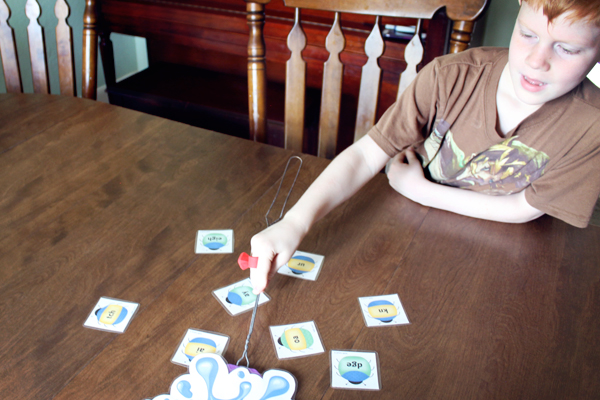
Start with a Multisensory approach Engaging all the learning pathways of hearing, seeing, and touching has been consistently shown to help students perform better and remember more of what they learn. It is much easier to master a concept if several areas of the brain are engaged simultaneously through multisensory learning, as Marie Rippel notes in her article on Multisensory Teaching.
Make it Sequential Concepts taught in a logical, intentional sequence ensures there are no gaps in the lessons.
Use an Incremental “Ladder” Each lesson should build carefully on the previous lessons so the child moves through the material in a step-by-step, logical order. Learning gaps are a primary reason handicapping children from learning to spell with proficiency. That’s why we recommend the “no-gaps approach to spelling” with All About Spelling.
Include Cumulative Review Regular and consistent review of previously taught material helps information move from short-term to long-term memory.
Individualized Lessons Using an open-and-go program like All About Spelling means you have the best of both worlds; you don’t have to create the lessons yourself, but you can work through them at the speed that is best for your child. You set the pace; the curriculum does not.
Phonogram-Based Learning the letters and letter combinations that make up all the sounds in the English language is foundational to master spelling (and reading!) If trying to figure out phonograms sounds confusing, here’s an easy-to-use method for teaching phonograms.
Teach Every Concept Explicitly Many spelling programs leave it up to the student to make leaps of understanding about how phonograms come together to make words. A more effective approach is to assume nothing and teach every concept and rule in a clear, intentional manner.
These seven steps follow the Orton-Gillingham approach to teaching the logic and rules behind spelling. In this article about How We Teach is Why We Work, discover why this method is exceptionally effective for students of all abilities.
How Spelling Instruction Supports Struggling Learners
Some kids just don’t pick up spelling easily—and that’s okay. Children with dyslexia or language-based learning differences often require a distinct type of instruction.
Scripted and open-and-go (perfect even if you’re not a natural teacher)
Success breeds confidence. Using the OG approach, even struggling students experience success with spelling and reading. Once they realize they can spell, it’s like a dose of confidence that encourages them to keep trying.
These features make it incredibly helpful for kids who learn differently and need explicit, sequential, cumulative lessons with systematic review.
Common Mistakes to Avoid
Even the most well-meaning parents can fall into a few common traps. Here’s what to watch out for:
Relying only on weekly spelling tests. These don’t actually teach spelling; they just test temporary memorization. Do you know if your child’s spelling lists make sense for the way they learn? This article will explain why certain types of spelling lists are ineffective: Why Some Spelling Lists Don’t Work.
Assuming that reading a lot of quality literature is enough to build good spelling skills. Excellent readers frequently struggle with spelling. The best way to maximize both reading comprehension and proficient spelling is to use reading and spelling curricula that employ the same method, such as All About Reading and All About Spelling, so that the concepts learned in reading are reinforced in spelling lessons. This helps retention and mastery.
Moving too quickly or trying to cover too much at once. There is no reward or requirement to finish a curriculum in one school year. If your child is struggling with a particular concept, it is perfectly fine to slow down and spend longer on that lesson. This article on the Funnel Concept explains why teaching too many concepts at once often does not lead to increased learning: The Funnel Concept.
Skipping review. Mastery takes time and repetition. Children can only absorb so much at any one time. Even though you taught a lesson and they did the activities, it does not mean they “got” it.
Moving to the next grade just because your child completed the previous grade. This is a common problem with traditional programs that move a child ahead simply because the school year is over. Advancing a child to new material without mastering the underlying concepts will leave them falling farther and farther behind each year. All About Spelling is not grade-level based. Placement for spelling is based on the student’s knowledge of spelling rules and concepts rather than grade level, reading level, or the words a student has memorized. Administer this simple placement test to your child to determine the best level, ensuring they haven’t missed any critical lessons: Spelling Placement Test.
Tools and Resources That Help
The right tools make all the difference! Here are a few favorites:
Letter tiles: These are the heart of All About Spelling’s multisensory approach. Kids can physically build words and manipulate sounds.
Phonogram cards: These help kids recognize and practice all the common letter combinations (like “th,” “ai,” and “ough”).
Flashcards: Essential for organizing customized review for your student, and useful for turning review time into a fun game.
These tools take spelling off the page and make it interactive and engaging.
FAQs About Teaching Spelling
At what age should I start teaching spelling?
You can begin informal sound work in preschool, but structured spelling instruction typically starts around age 6, once kids have a solid grasp of basic phonics.
Is phonics the same as spelling?
Not quite! Phonics helps kids read by decoding words. Spelling is encoding—putting sounds into written form. They’re two sides of the same coin, and they support each other, but are fundamentally different skills.
Why does my child read well but spell poorly?
Reading often involves recognizing words by context and familiarity. Spelling requires a deeper analysis and recall of letter patterns and rules; it’s a more challenging skill.
How many spelling words should I teach each week?
It depends on your child’s pace, but less is more. Mastery over memorization is the goal. Focus on 5–10 words a week, along with review and practice.
What’s the best way to help a struggling speller?
Utilize a structured, multisensory program, such as All About Spelling. Go at your child’s pace, review often, and make learning hands-on and fun.
You Can Teach Spelling Successfully
You don’t need a teaching degree or a background in linguistics to teach spelling well. With the right approach and support, you can help your child become a confident, capable speller.
If you’re not sure where to start, check out All About Spelling. It’s a well-researched, award-winning, and proven approach, and best of all, it works. Just ask our hundreds of thousands of happy families.
References
_________________________ 1Weiser, B., & Mathes, P. (2011). Using Encoding Instruction to Improve the Reading and Spelling Performances of Elementary Students At Risk for Literacy Difficulties: A Best-Evidence Synthesis. Review of Educational Research, 81(2), 170-200. https://doi.org/10.3102/0034654310396719 (Original work published 2011)
This is such an encouragement to me to keep going with my son! Thank you for the reminders that it is important to learn spelling because it has good learning spillover into other areas.





Haley Carraway
says:This was helpful! Thanks so much!
Robin E. Williams
says: Customer ServiceYou’re welcome! I’m glad this was helpful.
Gina
says:This is helpful, thank you!
Robin E. Williams
says: Customer ServiceI’m glad this was helpful, Gina!
Dayla
says:Your spelling information has helped us so much. Thank you
Robin E. Williams
says: Customer ServiceYou’re welcome, Dayla. I’m so pleased it has been so helpful for you!
Amanda
says:This is such an encouragement to me to keep going with my son! Thank you for the reminders that it is important to learn spelling because it has good learning spillover into other areas.
Robin E. Williams
says: Customer ServiceYou’re welcome, Amanda! Spelling is important, even in this day of autocorrect and devices. I’m glad you are encouraged to keep going!
Zorah F
says:I love the comprehensive approach to laying a solid foundation for teaching spelling!
Robin E. Williams
says: Customer ServiceThank you, Zorah!
Sandy George
says:My daughter is loving all about spelling level 1!
Robin E. Williams
says: Customer ServiceGreat to hear that your daughter is doing so well, Sandy! Thank you!
Karyn Hughes
says:Always have loved the multi sensory approach.
Robin E. Williams
says: Customer ServiceThank you, Karyn!
mel tor
says:love this curriculum