Search

We all do it without thinking when we read: blending the sounds of phonograms together to make the word. It feels so natural; we don’t consciously sound out each letter and then blend them into a word. Somewhere between about 3 to 8 years old, you learned to blend letter sounds into words and read them smoothly.
Your child may know their letters, but how do you help him blend those into words so reading is smooth and effortless? We’ll start by understanding what blending is before we get into how to teach blending sounds step-by-step.
Blending sounds means smoothly combining individual phonograms to form a word.
For example:
These are simple blending sounds examples, often called CVC (consonant-vowel-consonant) words.
When blending sounds in phonics, children need a four-step process to move from:
Sounding out a word is saying each sound separately. Blending sounds is the smooth connection of those sounds into a word.
So if a child says “/d/…/o/…/g/” but does not recognize dog, the blending process is still developing.
Many phonics programs skip the explicit step by step process that helps your child smoothly blend phonograms into words. “Cumulative blending” is the missing secret sauce that builds strong blending skills because it forms a path from sounding out to blending to comprehension.

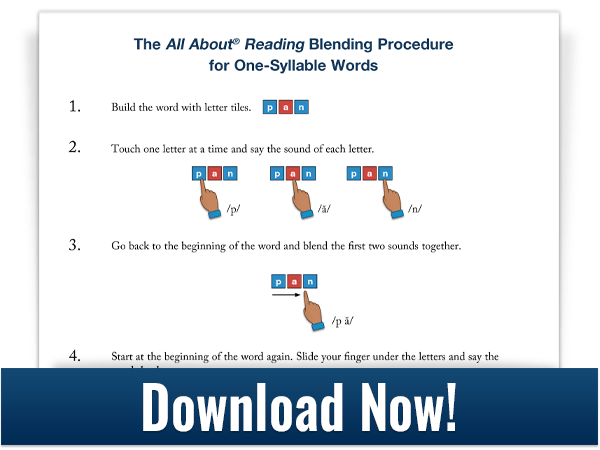
Research shows that multisensory learning produces exceptional results because multiple pathways of sight, hearing, and touch are engaged simultaneously. For this reason, start teaching blending by using letter tiles and build a simple 3-letter word, such as /dog/ using individual letter tiles. Model the following steps for your student and then have your student repeat each step after you:


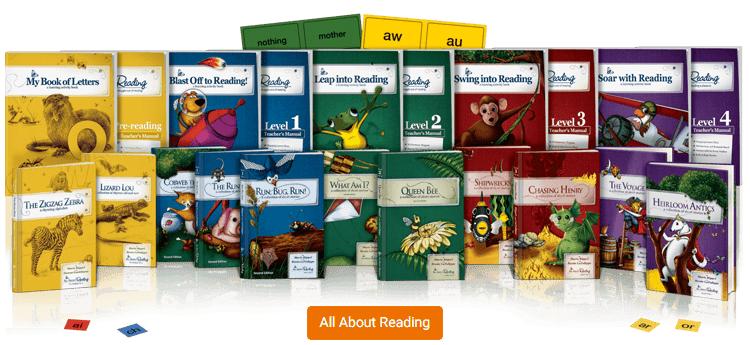
All About Reading Level 1 starts this all-important skill right from the very first lesson. The program intentionally starts with the sounds that are easiest for a child to learn, helping to ensure a positive experience from the start and building confidence quickly.
Our free Blending Procedure PDF has complete step-by-step instructions for both one-syllable and multisyllabic words.
Once you’ve got the steps above down, here are a few tips from master teachers:
When your child can say the sounds of the letters in the order in which they appear, and can then blend those sounds into a recognizable word, she is able to read thousands of phonetically regular words.
Blending helps your child move beyond identifying individual letter sounds to recognizing whole words. As word recognition becomes more automatic, she can devote more attention to understanding what she reads. This makes blending an important foundational skill for reading comprehension.

Blending is essential to early reading because it allows your student to switch from focusing on the sounds the phonograms make to comprehending the words she reads. Reading becomes more fluent and confident.
A child who can blend sounds smoothly into words becomes a stronger, more independent reader. It’s an essential skill that sets the stage for greater academic progress in later years.
Blending sounds for kindergarten should feel relaxed, interactive, and consistent. Simple, brief daily routines work best:
Using activities and games when teaching blending sounds makes it fun and engaging, which helps the learning stick. When your child feels relaxed and under no pressure, his mind is more open to learning, which leads to better retention.
For the beginning reader, games don’t have to be complex or lengthy. Short, sometimes silly, and simple are best.
As your child becomes more confident blending sounds, introduce activities that provide practice with more complex sound combinations. Our free final blends resource offers another opportunity to build these skills through hands-on practice.
Blending sounds worksheets for kindergarten seem like an easy solution. Download a few, and you’re off and running. As mentioned above, multisensory learning is a much more powerful and far less stressful way to introduce blending sounds to your child.
Worksheets are a form of passive learning. It assumes he has listened to instructions and can easily translate them into marking the correct answers on a worksheet. It also requires a mastery of the small motor skills necessary for writing. Many young children are still learning to write easily. Their brains struggle to do both writing and figure out answers at the same time, which only adds stress.
Children have limited ability to manage emotions, so the frustration they feel when attempting two cognitively challenging skills at once will often manifest as anger or a sullen refusal to do the work. This sets the stage for ongoing conflict between teacher and student.
Avoid the frustration and learn to blend sounds using hands-on letter tiles and phonogram cards in lessons designed to teach the way children learn best: brief, multisensory lessons, guided by a teacher with a step-by-step, scripted lesson plan right at hand.
For parents wondering how to help their child with blending sounds or what to do when a child can’t blend sounds, curriculum matters more than ever.
If your child struggles to remember individual letter sounds, that foundational skill may need additional attention before blending becomes comfortable. See our guide to teaching letter sounds to struggling students for practical strategies and multisensory activities.
All About Reading is especially helpful, as it is an award-winning, research-backed curriculum intentionally designed to teach blending sounds through multisensory instruction, so even struggling students can become fluent readers.
Lessons are designed to give your child success from the very beginning and only take about 20 minutes per day. Parents appreciate how easy the lessons are to implement, even without prior teaching experience, thanks to a comprehensive teacher’s manual.
All About Reading incorporates tactile letter tiles, visual activity sheets, and beautifully crafted decodable readers. These tools complement verbal explanations and allow students to manipulate sounds, patterns, and words concretely. The right tools make All About Reading an effective reading curriculum for students who need to learn or improve their skills in blending sounds.

Instead of guessing what to try next, parents have a roadmap and that can make all the difference. Try some free sample lessons today.
Learning to blend sounds is highly individualized. Some children can grasp it in a matter of weeks. Other children will take longer. A major advantage of the All About Reading program is that you can customize the progress to match your student’s pace. She moves forward only when ready, so you can be sure no crucial foundational understanding is missed.
It’s important to clarify what we mean by sight words before answering that question. There are four common definitions:
The most common definition of sight words is words that cannot be decoded phonetically, and we’re going to use that definition. Very few words are truly sight words and it’s important to wait before introducing them so your child understands what reading phonetically means and he does not get used to guessing words before sounding them out. Our recommendation is to start with blending sounds, and when he is comfortable identifying individual letters and blending them, gradually introduce very simple, common sight words. All About Reading calls them Leap Words, and it isn’t until over halfway through Level 1 in lesson 31 that the first 3 basic Leap words, or, for, and no, are introduced.
You can learn more about what you need to know about sight words in this article.
Using worksheets to practice blending sounds appears logical on the surface. However, trying to put pencil to paper, figure out how to form letters, manage the small motor skills of writing, while simultaneously figuring out the answers is a heavy cognitive load for a young brain.
Multisensory instruction is far more effective, facilitates long term mastery, and reduces the fatigue that often leads to frustration and refusal to do the work.
We recommend using letter tiles and phonogram cards in conjunction with modeling the blending process, and verbal reinforcement to engage the auditory, visual, and tactile learning modes for better comprehension and retention.
Most children begin blending sounds during their first formal reading lessons.
However, readiness is more about skills than age, and each child will be ready to work on blending in their own time. Before you attempt to teach your child to sound out words, check to see if he is ready. Here’s a free Reading Readiness Checklist for you to download. If you discover that your child isn’t quite ready for reading instruction, you can use the All About Reading Pre-reading program to prepare.
At first, learning to blend sounds will feel laborious and unnecessarily slow. Your child may take two steps forward and one step back. This is one area where extra patience will pay off handsomely in the end. Once your child gets it in a way that feels as easy to them as sliding down a water slide, they will suddenly get it and amaze you with their reading ability.
Using a program like All About Reading will give you the tools, instructions, and confidence to turn your child into a confident reader.