
Search
You may think that a “good memory” is something that your child either has or does not have. If that were the case, there would be little you could do to help your child become a better learner. But fortunately, this isn’t the case! You CAN help your child with her memory if you begin with an understanding of something I call the funnel concept.
When explaining new concepts and teaching your child, it’s easy to assume that there is an unobstructed pipeline between you.
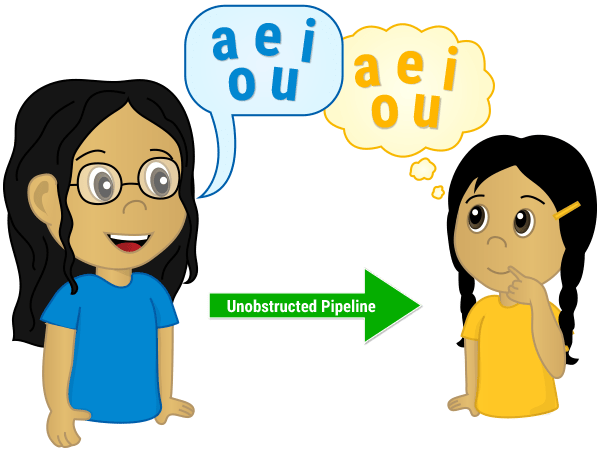
You explain something—like the concept that every word has a vowel—and you expect that your child will automatically file that nugget of information away and remember it in the future. You assume that since you taught it, your child will “get it” and your work will be done.
For many parents, this picture is far from reality. Too often, it seems that lessons go right over the child’s head … that nothing sticks.
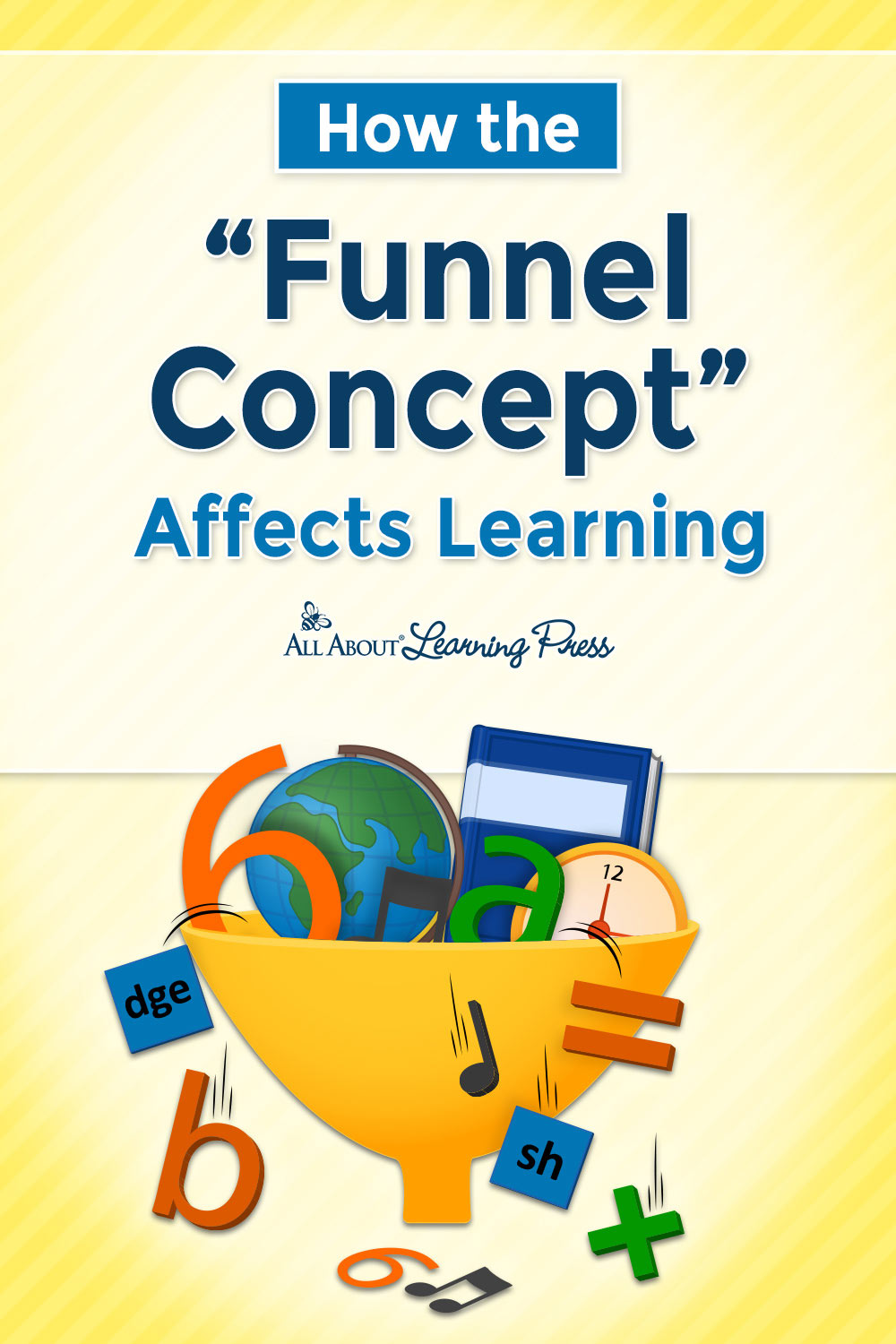
Instead of picturing information going through an unobstructed pipeline, it’s more accurate to picture information passing through a funnel, like this:
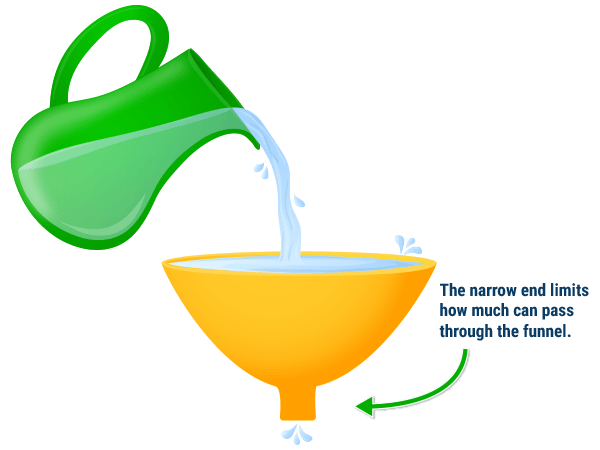
If you pour too much water into a funnel too quickly, what happens? The water overflows the top of the funnel, right?
A similar thing happens when we try to teach too much at a time. You can pour a lot of information in, but your child’s memory becomes overloaded and dumps the excess. You lose control over what actually makes it through the funnel.
This is what we call the funnel concept.
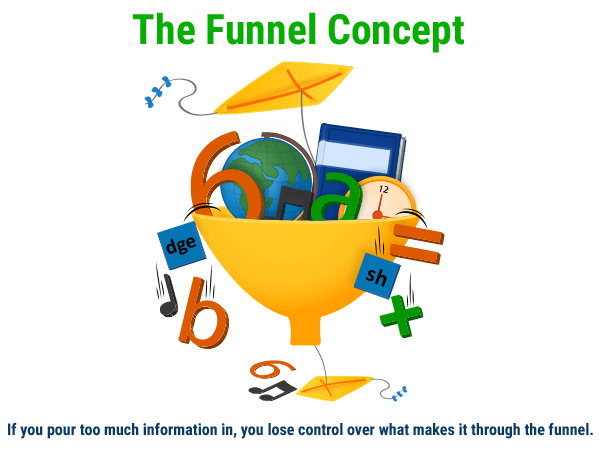
Now that you understand what the funnel concept is, let’s look at how to apply it to your teaching.
When you teach, there are three possible outcomes:
To reach the goal of meaningful learning, you need to avoid overwhelming your child’s funnel.
To apply this concept in a practical way, let’s take a look at a common spelling test that focuses on the sound of long I.
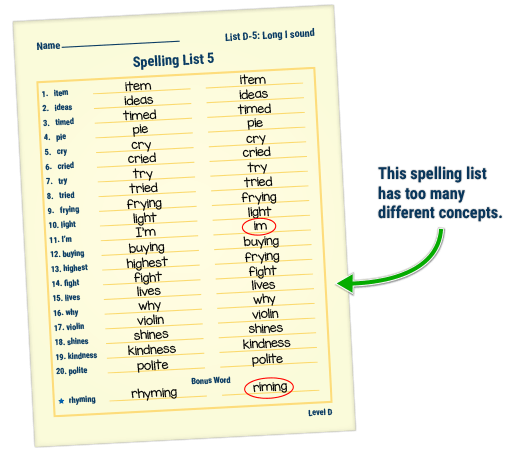
Getting confused yet? Has this list given you information overload? Wait—there’s even more!
That’s a lot of information for just one spelling list!
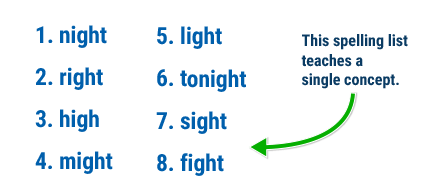
This is an example of the kind of list used in the All About Spelling program. Only one concept is introduced in this spelling list—long I spelled IGH. And that single concept is practiced using multisensory methods—auditory, visual, and kinesthetic.
Now ask yourself: Which spelling list is more likely to get through your child’s funnel and result in lasting learning? It may look better on paper to be covering twenty words at once, but the truth is that your child will achieve more permanent learning when you teach only the amount of information that she can process at one time.
So next time you’re teaching your child, think about teaching through a funnel and introduce just one main concept at a time. You’ll be pleased with the amount of meaningful learning that can occur!
Another great way to help your child learn faster is by using schemas. In this free e-book, “Help Your Child’s Memory,” you will discover…
Let me know if this post was helpful to you! Have you experienced “funnel overload” with your kids?


Lynette Visser
says:Thank you
Robin
says: Customer ServiceYou’re welcome, Lynette.
Allison
says:This is such a helpful picture for me to remember when teaching my children any subject! I’m even more convinced that a little done well each day is the best way to help my children learn everything.
Robin E.
says: Customer ServiceYes, a great way to put it, Allison! A little done well daily is a wonderfully effective approach!
Rachel
says:Great reminder!! I feel like I need to apply this to all our subjects, not just spelling.
Robin E.
says: Customer ServiceSo true, Rachel! The concept does apply to all topics of learning.
Maureen
says:I wish I know about this years ago! It would have saved us a ton of frustration.
Kara F.
says:Very helpful! Thank you!
Robin E.
says: Customer ServiceYou’re welcome, Kara! I’m glad this was helpful!
Toni Drummond
says:This concept makes so much sense, yet we often try to cram so much into our childrens’ young, developing minds. AAS has the right idea for student retention and mastery.
Robin E.
says: Customer ServiceGreat to hear that All About Spelling has helped, Toni!
Danielle
says:I love this idea! It makes so much sense, and is a good reminder to keep the lessons short. We love AAR and when the time is right, I’m sure AAS will be a great addition to our homeschool.
Robin E.
says: Customer ServiceI’m glad this made sense for you, Danielle!
Rosemary
says:Wow! Never thought about it this way!
Vanessa
says:This makes such perfect sense but I’ve never seen it presented this way. Thank you for the simple analogy to help us remember to take it slow when presenting new concepts!
Robin E.
says: Customer ServiceYou’re welcome, Vanessa! I’m glad this helped you to think of the issue in a new way. It is important to keep in mind while teaching any topic.
Rebecca
says:I love this! I wish I could have learned this way. At least I get to make sure my kids get too.
Lori
says:This is why I love All About Reading. It presents information in digestible chunks.
Robin E.
says: Customer ServiceThank you, Lori!
Sara Scoggan
says:I never thought of there being so much information in one spelling test. To adults it all looks like one concept…words with a long i sound!
Robin E.
says: Customer ServiceA good point, Sara. It is easy as an adult to forget all the incremental details that go into learning. It’s called the “Curse of Knowledge”.
Marie-Michele
says:This is so helpful! And not only for spelling but all subjects. I do tend to talk about everything I know about a topic so I’ll be keeping that in mind!
Robin E.
says: Customer ServiceOh, yes, so true, Marie-Michele! We can overload a learner’s funnel in any subject. Keeping it in mind goes a long way to avoiding the problem though.
Beth H.
says:This is really helpful! A great visual to help me remember what feels slow for me is just right for him.
Robin E.
says: Customer ServiceI’m glad this was helpful for you, Beth! Yes, it is so important to go at the pace that is right for each unique student.
Holli Weeks
says:This funnel concept makes so much sense to me. Thank you for explaining it this way. I need to be aware of when I’m overloading the funnel.
Robin E.
says: Customer ServiceYou’re welcome, Holli. I’m glad the analogy of the funnel was helpful for you. Begin aware of it can make a big difference in teaching.
Amanda
says:This is something I learned long ago when teaching my older kids- less is really more. Lessons should be short, memorable, and defined. For younger learners, games are an excellent way to reinforce the lesson.
Robin E.
says: Customer ServiceGreat points, Amanda! Thank you!
Carol
says:Thank you for the reminder. I guess exceeding the 20 min per session recommendation affects the retention of new concepts too. We tend to often exceed the time per session.
Robin E.
says: Customer ServiceYes, your guess is spot on, Carol. When learners are tired, it is more difficult for knowledge to be moved into long-term memory.
Ashley B
says:This was really helpful. I definitely know I’ve been guilty of overloading before.
Robin E.
says: Customer ServiceI’m glad this was helpful for you, Ashley.
aswathi
says:Dear Ma’am,
Thank you so much for giving Great concept like funnel overload.
I am from India.
Robin E.
says: Customer ServiceYou’re welcome, Aswathi!
Martha R.
says:Thank you for this reminder to keep each lesson focused and to be patient!
Robin E.
says: Customer ServiceYou’re welcome, Martha!
Megan
says:This concept is exactly why my daughter is so much more successful in AAS than she ever was on standard classroom spelling tests.
Katy
says:It’s such a helpful concept to remember. I forget that we have “hooks” to hang new information on, but they’re building those “hooks” to make connections with later learning.
Karissa
says:This makes so much sense! It is like when me kids eyes glaze over and they stop paying attention when an adult gives them a highly detailed explanation to something they were looking for a simple answer to. Haha!
Samantha Wu
says:I wished public school taught me this method
Kelly
says:very interesting read
Robin E.
says: Customer ServiceThank you, Kelly.
Stephanie
says:A very important thing to remember!!
Jessica Ervin
says:Wow I would have never knew this!
MARY SCHUH
says:This is so so helpful! Thanks!
Lisa Fetty
says:I love AAR & AAS! Both are such a wonderful programs
Jodi
says:Great concept – I never thought of it this way. We forget how we learned as children. Thank you for these articles so we can teach better and (hopefully) avoid these mistakes! :)
B
says:Thanks – dry helpful