
Search
Learning how to spell words that don’t follow the rules can be … well boring. And we can’t have that!
In All About Spelling, we’ve labeled unruly words like said, who, and been as “Rule Breakers,” and we’ve created several motivating ways to make learning to spell these words a bit easier … and a lot more fun!
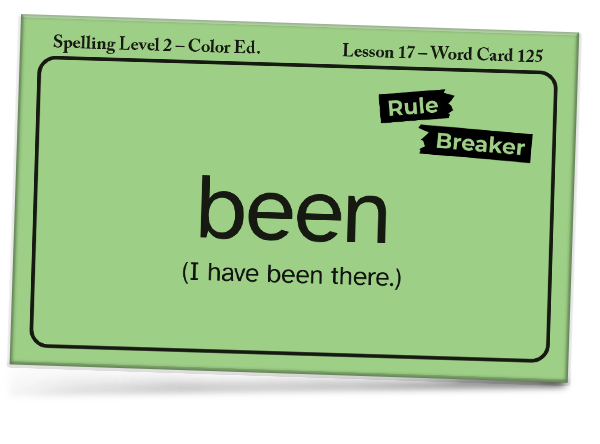
When your student encounters a Rule Breaker in All About Spelling (or the real world!), just reach for one of these activities and let the fun begin!
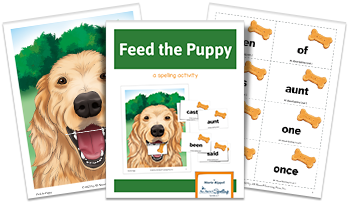
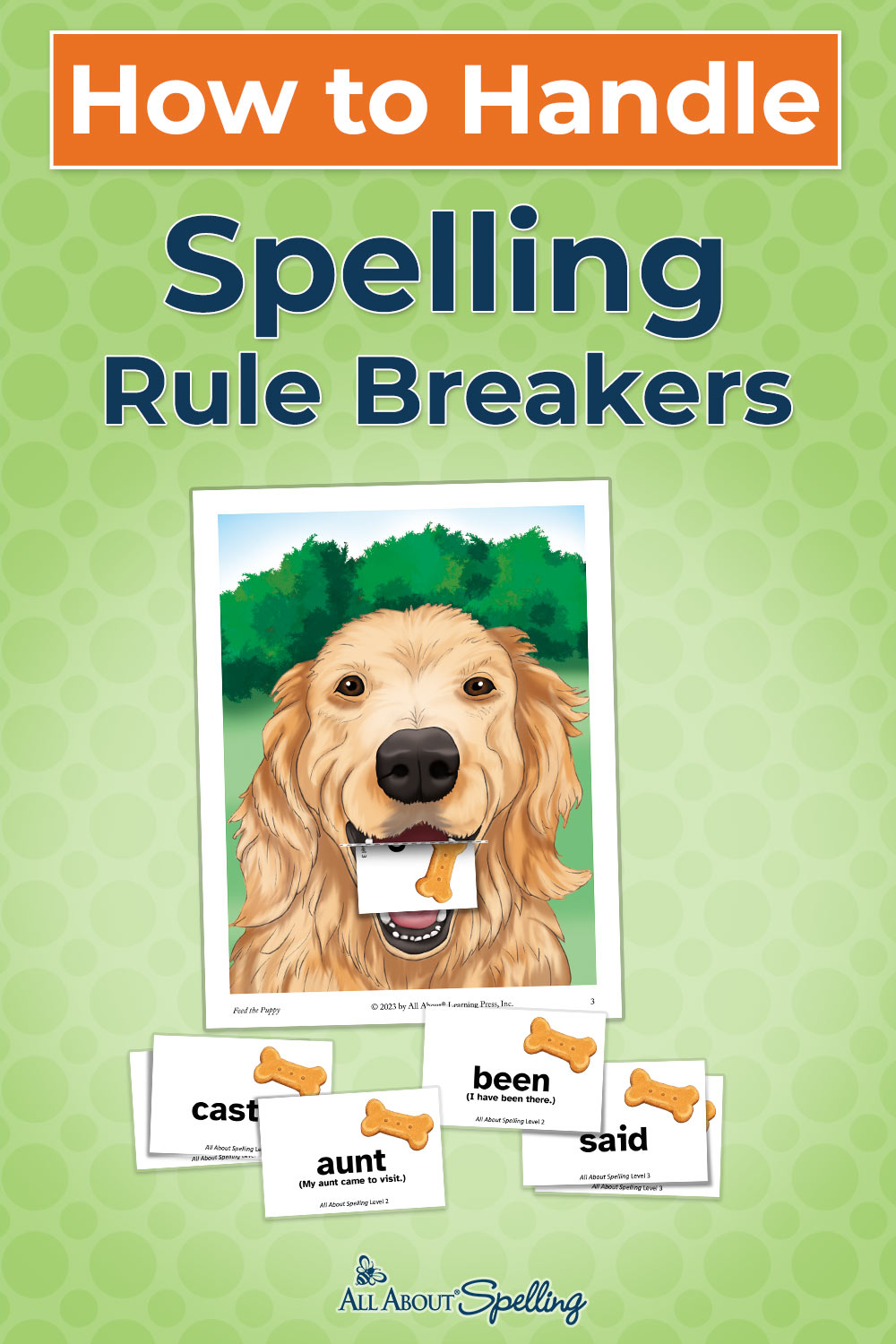
When you encounter a word that breaks the rules, this adorable puppy is ready to help you deal with the misbehaving word! Download our Feed the Puppy activity.
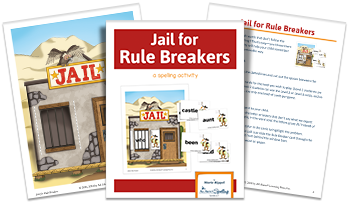
A short time out just might help control those Rule Breakers. Download our Jail for Rule Breakers activity.
Have an older student? Older kids like these treatments of unruly words just as much as younger ones do, so pick your favorite and see how those tricky words stick in their minds!
Look at the Word Card and then look at an empty spot on the table.
Picture the word on the table and spell the word aloud three times.
Using a finger, “write” the word on the table three times in VERY BIG LETTERS.
Spell the word on paper three times.
In the space of a minute or two, your student will have practiced the word nine times.
In this exercise, your student “writes” the Rule Breaker on a tactile surface, using his pointer finger instead of a pencil. Some surfaces to consider include:
Sand in a shoe box lid
“Feely” fabrics such as burlap, velvet, or corduroy
Plush carpet square
We treat Rule Breakers differently from other words to help kids learn them soon after they are introduced. Two effective ways to burn something into memory are frequency (repeated review) and intensity (different and surprising treatment), so keep these ideas in mind as you handle the Rule Breakers. Doing whatever it takes to enable your student to spell these words correctly right from the start will prevent problems later.
Thankfully, the vast majority of spelling words do follow consistent patterns. And when kids first start out, we are careful to work only with words that follow the rules. This helps kids internalize the fact that there are reliable rules and that they can make sense of spelling. They discover that they don’t need to resort to guessing or memorizing strings of letters.
So before introducing the first Rule Breakers, make sure your student can spell hundreds of “law-abiding” words. Then—and only then—begin teaching the unruly ones.
Which spelling words cause your student the most difficulty? Let me know in the comments, and then download my free e-book called “Six Ways We Make Spelling Easy” below!


Rachel
says:Sound fun
Robin
says: Customer ServiceThanks, Rachel!
Nicole
says:Love these free printables. Thanks
Robin
says: Customer ServiceYou’re welcome, Nicole!
Liddia
says:I love these activities!! How fun!!
Robin
says: Customer ServiceThank you, Liddia!
Jessica
says:I just downloaded the “Jail for Rule Breakers” activity to use with my son. I think he will find it very funny! Thanks for the fun idea!
Robin
says: Customer ServiceYou’re welcome, Jessica! My kids enjoyed throwing rule breakers in jail. We also used the jail for words that a child kept having trouble with, even if it wasn’t a rule breaker. We threw it behind bars for “disturbing the peace!” It was a great way to remove the fault from the child for misspelling a word and placing the blame on the word itself.
Jaclyn
says:Thanks for the tips!
Robin
says: Customer ServiceYou’re so welcome, Jaclyn!
Amber H
says:This is so helpful!
I wondered how to teach those mischievous rule breakers. ;-)
Robin
says: Customer ServiceThank this is helpful, Amber!
Katie Montie
says:I can’t wait to use these techniques when we start spelling level 1 this year!
Robin
says: Customer ServiceWonderful, Katie!
Ahuva
says:I love all the ideas for tactile practice! These are such fun ways for students to fingerspell the “rule breakers.”
Robin
says: Customer ServiceThank you, Ahuva! Learning is more effective when it is multisensory!
Melissa Flint
says:Love all about spelling. My son has had a very difficult time learning to spell and this seems like the only thing that has helped boost his confidence. Thank you!
Robin
says: Customer ServiceThank you, Melissa! I’m so pleased to hear that All About Spelling is helping your son’s confidence!
Mary
says:I’m thrilled with this method. Finally a spelling program that will work!
Robin
says: Customer ServiceWonderful, Mary! Thank you.
Ri
says:This is definitely a great spelling tool. Crossing my fingers on winning!
Robin
says: Customer ServiceGood luck, Ri!
Sikethia Robinson
says:Thanks for the free resources!
Robin
says: Customer ServiceYou’re welcome, Sikethia!
Sikethia Robinson
says:Hi! I’m new here. Checking out all the information.
Robin
says: Customer ServiceWelcome! If you are looking for something specific, just ask. I’m happy to help!
Linda
says:Great ideas and thanks for the free downloads!
Robin
says: Customer ServiceYou are so welcome, Linda! Thank you!
Renee Eisley
says:What a creative way to help kids realize certain rule breakers! My son would definitely enjoy throwing words into jail!
Robin
says: Customer ServiceRenee,
My kids enjoyed throwing words in jail! It was such a fun way to remember tricky words!
Julie
says:I love the creativity of this program!
Robin
says: Customer ServiceThank you, Julie!
Michelle
says:My daughter loves animals, so the feed the puppy idea is great!
Robin
says: Customer ServiceMichelle,
Feeding the puppy is such a popular activity!
Anna
says:We’ve used the salt in a baking dish tip for spelling, but love the other tactile practice ideas! My kiddo is making great progress with AAS!
Robin
says: Customer ServiceSo great to hear that your child is making great progress with All About Spelling, Anna! Thank you!
Brandi
says:We love aas and have learned so much
Robin
says: Customer ServiceWonderful to hear, Brandi! Thank you!
Shannon
says:I love how the themed activities will help jog the student’s memory of these rule breakers!
Robin
says: Customer ServiceYes, great point, Shannon! The extra work with the dog or jail is a great way to make the words stick more in a child’s memory!
H S
says:Good ideas to reinforce spelling with “feely” things like sandpaper, fabric or salt.
Robin
says: Customer ServiceYes! Tactile learning makes a great difference.
Shanique H
says:Oh my how great. Looking forward to introduce spelling and incorporating the games especially the jail game. My son would be so tickled.
Robin
says: Customer ServiceThank you, Shanique! Great to hear your son will enjoy this.
Steph Peebles
says:So fun! Excited to try this with our little speller when we get there!
Robin
says: Customer ServiceThank you, Steph!
Amanda F
says:These seem like fun games to play!
Robin
says: Customer ServiceThank you, Amanda!
Sara Thompson
says:The Rule Breakers are always such a hard concept to introduce… excited to try it with AAS on my newest speller!
Robin
says: Customer ServiceSara,
Yes, rule breakers can be difficult, but All About Spelling makes them easier! Let me know if you have questions about placement or anything else. I’m happy to help!
Dawn
says:My son struggles with reading and we are finally making progress. We know spelling needs to be worked on so we are hoping to dig into AAS soon.
Robin
says: Customer ServiceDawn,
Let me know if you need help with placement or anything else. I’m happy to help!
Rosa
says:The rule breakers drive my justice loving, rule following son bonkers. Throwing them in jail is just the thing to satisfy him!
Robin
says: Customer ServiceRosa,
One of my kids enjoyed the jail for the same reason! And it helped him a lot to remember the words too.
maresa
says:We have all about reading level 2 and we are loving it.
Cant wait to try all about spelling.
Robin
says: Customer ServiceGlad to know that All About Reading is working well for you, Maresa! Let me know if you have questions about spelling or need help with placement or anything else. I’m happy to help!
Abigail
says:I love this idea and can already see how my daughter would enjoy this simply by the name. She by nature is my child who doesn’t quite like to do things by the book so having something called the “rule breaker” would be engaging for her. It’s also good to see how much practice they would get in such a short period of time. Repetition is key but this would not be boring in the least.
Robin
says: Customer ServiceAbigail,
Such a great point about repetition and it not being boring. That is so important! A student needs to be engaged with the learning for it to be fully effective!
Erica
says:Love how everything is so broken down! Easy for kids and parents to understand!
Robin
says: Customer ServiceThank you, Erica! Glad this helps makes it easy to understand.