Reading Aloud to Kids Who Can’t Sit Still
Do your children have a hard time sitting still during read-alouds? Many kids do. They can sit still for two minutes, and then—ZOOM!—they are off. There are so many interesting things to do at any given time. There are block towers to construct, cool insects to check out, computer games to play, and physical feats to perform. Sometimes all at once! Life is great!
Good listening comprehension spills over into good reading comprehension, so you definitely want to figure out how to make read-aloud time doable for you and your child.
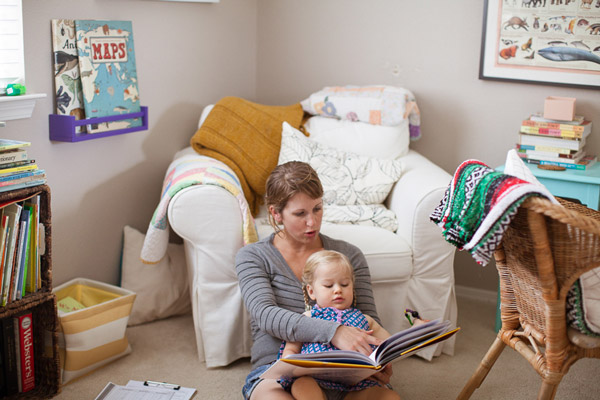
Reading Aloud with Active Children
Reading aloud for twenty minutes a day is important. In fact, read-aloud time is so important that it is built right into the All About Reading program, with a prompt in every lesson to remind you.
10 Tips for Reading Aloud to Kids Who Can’t Sit Still
Here are 10 ideas to try if you have an active child.
- Read after physical activity. Make sure that he gets plenty of physical activity—riding a bike, playing tag, rolling down hills, climbing the jungle gym—kids are designed to MOVE, so take care of that need before expecting them to sit still for a book.
- Consider the timing of your read-alouds. Some children have an extra dose of energy right after breakfast, so this wouldn’t be the ideal time to ask them to focus on a storybook. Midafternoon or bedtime may be a better choice.
- Keep your children engaged with interactive books. Let them lift the flaps, pull the tabs, count the cats. Here’s a list of some really good interactive books.
Read during lunch or snack time.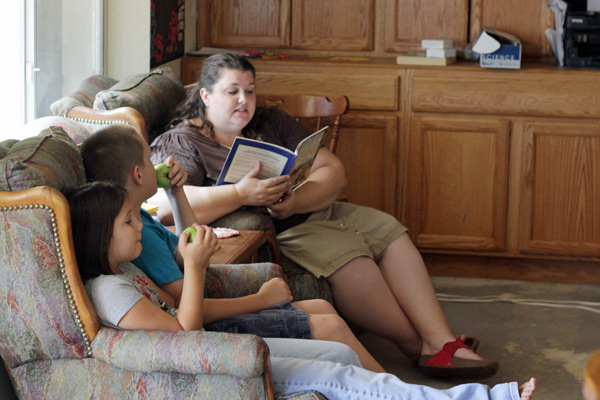
Listen to audio books in the car.
Read to your child while he’s in the bathtub.
Try reading books that appeal to your child’s unique interests.
Let your child sit on a Move-N-Sit cushion.- Eliminate avoidable distractions such as cell phones, the television, or computer games being played in the background.
- Set a timer for read-alouds. This way your child knows that there will be a definite end to the sitting-down-and-listening part of his day. He knows that the timer will go off, reminding you that book time is over and he can propel off like a rocket to his next adventure.
One Final (Slightly Controversial) Tip
I didn’t believe this tip until I worked with some serious wigglers myself.
Some children need to be actively doing something with their hands in order to concentrate.
This can be as simple as holding a toy car and spinning the wheels or as involved as building a jigsaw puzzle or coloring with crayons.
Some children are so overwhelmed by the act of sitting quietly and concentrating that they simply cannot stay still, making it nearly impossible for them to listen.

But when a child is allowed to quietly play with something during reading time, he can expend physical energy in a nonintrusive way and focus on listening to the story. Of course, if the quiet play escalates into a full-fledged game, then attention will wander and any positive listening benefits will be lost.
Here’s the key: let the child stay engaged in a calming activity during read-aloud time and help him learn the boundaries of what constitutes a “quiet” activity (this definition can vary family to family).
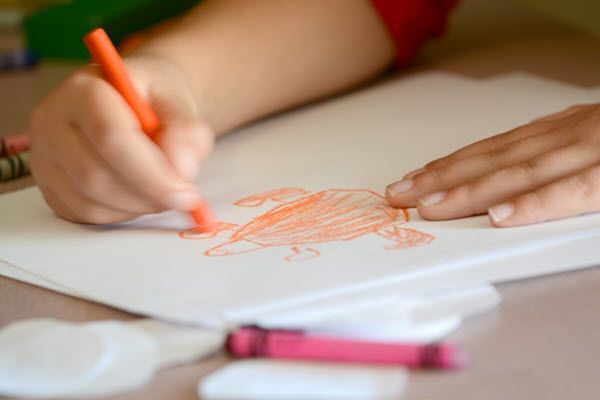
Here are a few ideas for keeping hands busy:
- Thinking Putty
- Playdough
- modeling wax
- Lego® bricks
- doodling
- lacing cards
- coloring
- knitting
- building blocks
- beading
- making friendship bracelets
Experiment to see what works in your household. Some children are helped by keeping their hands busy, while others are distracted by it. Some children are able to focus better in the morning, while others have a calm, receptive mind before bedtime.
Making read-aloud time work for your family may require a bit of trial and error. If read-aloud time isn’t working right now, I encourage you to try some of the ideas shared above. Don’t give up! It is critical to develop your child’s listening comprehension through read-alouds, so experiment and be open to trying new things.
Is your child a wiggler? Do you have a read-aloud tip to share?
Read-Aloud Tips Recommended by Our Readers:
- Put a pile of clean laundry in the middle of the floor and have the kids fold while mom reads. (Recommended by Molly M. via Facebook)
- I read aloud at the deserted park near our house, while he moves. It’s how he learns best! (Recommended by @nottheformerthings via Instagram)
- I have my wiggler brush my hair while I read aloud to him. He sits on the couch and I sit on the floor. That way he can see over my shoulder to any pictures. His hands stay busy and he listens! (Recommended by Gina via blog comment)
- I like to have the boys act out the stories that we are reading when they are in a super wriggly mood. Sometimes we make up hand signals they do every time they hear a certain word. (Recommended by Rachel via blog comment)
- I put together a box of “hand fidgets” for him – things he can squish around in his hands while he’s listening but that won’t distract him from his lesson. (Recommended by Paula via blog comment)
- When my daughter has the wiggles, she holds a toy car in her hands. Rolling the wheels with her fingers seems to help keep her listening without creating any distractions. (Recommended by Liz T. via blog comment)
- My children all like to do handicrafts while we read…embroidery, crochet “chains”, and drawing have all been wonderful during read-aloud. (Recommended by Amara K. via blog comment)
- Color, draw, Perler beads, Play-Doh, Rainbow Loom, and crocheting have all worked well. (Recommended by Carlyn L. via Facebook)
- Puzzles are a favorite at our house right now. (Recommended by @ourlittleschoolhouse via Instagram)
Photo credit: Rachel Neumann and Shawna Wingert



Stephanie
says:Thank you for these!
Robin
says: Customer ServiceYou’re welcome, Stephanie!
Gale
says:One more activity for the last tip…just like we sometimes like to eat popcorn during a movie, some kids do really well having a snack or a drink while listening to a story.
Robin
says: Customer ServiceOh, yes, great tip! Read aloud during lunch or snack time is a great idea.
Pam
says:Kinetic learners need to move in order to take in new information. Other students may have excess energy, or they might have ADHD. For children with ADHD, giving them something else to do that is purely physical can allow them to focus when sitting still takes all of their attention to not move and not make noise. I’ve worked with preschool through early college age, and one of my top suggestions for students who need to move is to ask their teacher/professor to provide a recording or allow them to record, then exercise while they listen.
Some things which have worked for various children I’ve tutored and/or homeschooled:
fidget toys (usually becomes a distraction)
mini trampoline
stationary bike
elliptical
treadmill
building walls from tissue boxes
drumpad and fingers (no sticks!)
snapping at certain words or sounds
rocking chair
rocking horse
wobble stool
exercise ball (stationary, not feely moving!)
legos (creative build, no directions)
single barbie and lots of clothes
shuffling cards
drawing the story without seeing pictures (kids get a kick out of comparing their pictures to the illustrator’s)
measuring water
cutting and pasting a collage to represent the story
petting a dog or cat
wrestling with a dog
cat’s cradle (individual or with two)
quiet crafting (carpentry without hammering or drills, beading, weaving, sewing)
cooking
chores (dishes, folding laundry, dusting, picking up toys)
Robin E.
says: Customer ServiceThis is such a great list, Pam! Thank you for taking the time to share it!
I’ve used many of these activities while reading aloud, and they really do work! A favorite for a couple of the kids I read to, that you didn’t mention, was simply digging in sand or dirt. They happily dug for long periods of time while I sat in the shade nearby and read and read.
Isobel Gillian Ball
says:I don’t allow fidgeting unless the child is a genuine wriggler. If they fidit too much they get easily distracted. I know if I fidget , I don’t listen very well. The idea of some PE before storytime is very practical. I enjoyed your post very much, thank you.
Robin E.
says: Customer ServiceI’m like you, Isobel. I can only listen well if I am still or taking notes.
However, others respond differently to movement. Many actually need to move to be able to focus on auditory information, even if they don’t usually need to wriggle. Three of my children listened much better if they kept their hands busy. It’s remarkable, but coloring, building with Lego, folding laundry, or even just swinging results in much higher retention when I read aloud to them than if they sat still.
Gale
says:I was someone who needed to doodle in school so that my mind wouldn’t wander off while the teacher was talking. I was not a bouncy or hyperactive child but I now know that like my son, I probably had attentive type ADHD. In this type your body may not show signs of hyperactivity, but your mind wanders. I could LOOK like I was paying attention but be thinking about something else and not be hearing what was said at all.
Doodling gave me something to focus my attention on that allowed my mind to stay focused on the lecture…and not wander off during slow, less interesting, or repeated parts of the lecture.
Robin
says: Customer ServiceThank you for sharing your perspectives on needing to doodle or move to focus on listening, Gale. Great points about ADHD inattentive (two of the three of my children I mentioned above definitely have that).
Rachel Kelly
says:I have a tip that worked great for my dyslexic son. I bought an exercise ball for him to sit on. It worked wonders. When he was doing the reading I would sit in a solid chair and hold the book while he sat on the ball and bounced. The harder he bounced, the better he read. Once I tried letting him hold the book and I became nauseated very quickly.
Robin E.
says: Customer ServiceWhat a great idea, Rachel! I love that you found a way to work with your son’s high energy. I did something similar with my daughter, but without a ball. She did an amazing amount of schoolwork while squatting in a chair instead of sitting in it, or just standing next to the chair. The more energy expended the better the focus!
Elisa Llamido
says:Our best read aloud time has always been first thing in the morning. I read my hyperkinetic son awake and find him to be the most open and receptive at this time.
Robin E.
says: Customer ServiceIt’s great that you found a time of day that works best for your child, Elisa! Bedtime read alouds are not best for every child and every family.
Trisha Engelbrecht
says:I totally agree with your somewhat controversial tip. I had a 1st grade kiddo who listened BETTER when allowed to doodle on a whiteboard. (Plus, he was quiet so everyone else could listen too.) Of course, all the other kiddos wondered why that classmate could doodle and they couldn’t, so we had to have the conversation about doing what works for each person.
Robin E.
says: Customer ServiceI love that you lead a conversation with your students about different learning needs, Trisha! Too often people (not just kids, sadly, but lots of adults too) assume everyone learns best the way they themselves learn best. But of course, that is just not so. There is so much wonderful variety in people!
mary
says:you always have a way, of not only making reading interesting but teaching it as well.
Thanks a lot
Robin E.
says: Customer ServiceYou are so welcome, Mary! Thank you for the kind words.
Kim
says:I have two 5-6 year old wigglers going into 1st grade. I was thinking about trying some form of this next school year. I’m thinking about having pre-made containers in our classroom that they can pull out if they need to, and quietly use while I read. I’ll rotate the content to keep it interesting but hopefully not distracting. It is a controversial idea and I wasn’t sure if I was making a good decision. This post definitely gave me more confidence. Thank you!
Robin E.
says: Customer ServiceI’m glad this blog post gave you some confidence, Kim! My kids have always needed to do something active but quiet as I read aloud to them. Sometimes they will even ask me to read aloud while they do a chore like clean their bedrooms!
Rachel Hawkins
says:This is a helpful article. I never know if I should allow my kids to play with something, dance, wiggle, or make noises. I often wonder ‘where do I draw the line?” :) Thank you for the tips!
Robin E.
says: Customer ServiceI understand, Rachel. There is a line, but it is dependent on each family and maybe even each child. You have to figure out how much you can tolerate without being distracted from reading and how much your kids can do and still pay attention. I found with my children, as long as they weren’t attempting to read anything (no catalog browsing while I read aloud, for example) and they weren’t making noise (so I didn’t have to raise my voice to be heard over them), pretty much anything was okay.
Lindsey M
says:I have a wiggled and am still trying to find something that will work for us. Thanks for the tips!
Robin E.
says: Customer ServiceYou’re welcome, Lindsey!
Ina
says:Great suggestions! I’m slowly getting used to having my boys hang upside down from the couch while I’m reading to them. Somehow this seems to beore appealing to them than sitting straight.
Robin E.
says: Customer ServiceIna,
Who doesn’t love to hang upside down while listening! Under a blanket fort was another favorite place when my kids were little.
Devon
says:Like the list of ideas of things to play with while listening to a read-aloud. I haven’t experimented enough to find out what will work, but I should try a few of these items for my wiggly 1st grade boy!
Robin E.
says: Customer ServiceI hope you find at least a few ideas that help your boy enjoy read alouds, Devon!
Kayla Shertzer
says:These tips are very helpful!
Lucinda Barton
says:Great tips! We have a read aloud book on while in the car! It’s amazing how much they absorb while watching the world go by!
Lucinda Barton
says:We have a read aloud book on while in the car! It’s amazing how much they absorb while watching the world go by!
Noralba Jimenez
says:Thank you! So helpful
Robin E.
says: Customer ServiceYou’re welcome, Noralba.
Allyson
says:This is such a great list! I’m going to try some of these with my wiggler who never joins in for story time unless it’s at bedtime, or during a meal. Audiobooks in the car are some of our favorites too!
Robin E.
says: Customer ServiceI hope you find the ideas here helpful for your wiggler, Allyson!
Geneva
says:Thank you for these tips. I have 2 very active boys and the oldest (8) has ADHD. Read aloud a are so hard. We do some of the tips mentioned but not al of them.
Robin E.
says: Customer ServiceYou’re welcome, Geneva. I hope you find these helpful.
Julie
says:I have to get beyond my own “vision” of what I want read alouds to look like at my house and accept what I consider to be “distractions.” 😬 #personalgrowth
Robin E.
says: Customer ServiceI understand, Julie. I found I had to set some ground rules. They have to be quiet, not only not talking but also not loud digging through Lego or anything like that. And they have to remain in one spot. Walking around is just too distracting for me while I am reading aloud.
Heather
says:We’re always looking for new activities to do during our read aloud time!
Robin E.
says: Customer ServiceI hope you find good activities for your read-aloud time here, Heather! But if you ever need more ideas, just ask.
Ryan
says:Such great ideas. I have been using many of them to read aloud to my boys this year!
Tahira Abu-Bakare
says:This was very informative. Thank you so much :)
Robin E.
says: Customer ServiceYou’re welcome, Tahira! Thank you.
Kristy Griffin
says:I still have such a problem with this and my son is 12. If I’m reading to him he is constantly moving. It really causes issues if concentration for me and he isn’t always listening to the story. I have to focus on being calm and switch out me reading and him reading to help.
Robin E.
says: Customer ServiceI understand, Kristy! Have you tried giving him something focused to do with his hands, so that the rest of him can be still? I found with my son that if he has something to take apart (bikes, carburetors, Nerf guns, anything with lots of parts) he can focus better and be far less distracting and distracted. And other times he puts the same things back together after cleaning it or fixing it or whatever needed doing.
Gloria Cato
says:We always save our history and literature for snack time!
Nas
says:My son is always with lego while I read to him. He listens to audio books too while he build something. I guess it goes both hand in hand for him.
Mimi
says:Super helpful tips! My little has to wiggle so we read during breakfast and lunch to help. Blocks or any activity she can do without too much movement always helps!
Robin E.
says: Customer ServiceGreat ideas, Mimi!
Judith Martinez
says:I love the suggestion to allow our child to brush your hair while you read! I have some children that would love that! My 8 year old always wants to fix my hair.
Neeta
says:Love these ideas!!! My crew loves coloring pages so I can use those to give them something to do while reading. I also just learned that I can read during snack time. Never thought about that!!!
Holly
says:This a very interesting post for a bunch of reasons.